Spoiler-Free
Man, another mind-blowing mystery.
I loved how the story slowly uncovered the connections between the murders and the past. What started as a serial killer investigation turned into something much bigger and more disturbing.
Some scenes were genuinely hard to watch. The gruesome killing methods, the bodies, and Emi's instrument were scary and disgusting.
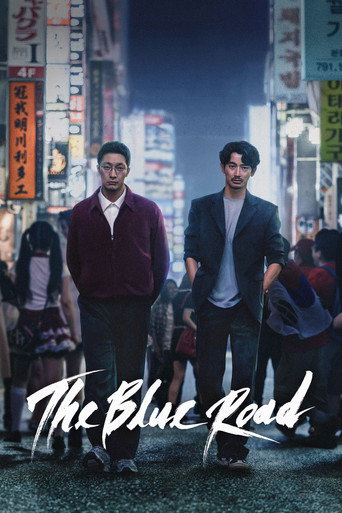
I also enjoyed the relationship between the Korean and Japanese detectives. Their growing trust and partnership made the story more meaningful.
A brilliant mystery, but also a sad story about history, identity, and human suffering.
Show spoilers
Spoilers & My Reaction
The plot twists and discoveries were insane. Those disturbing murders were connected to crimes committed years earlier, covered up by people with power. And Emi, who witnessed Hyun-tae killing Du-yeong as a child, later repeated those horrifying methods.
Kim Seok's story was heartbreaking. The man he trusted and loved had actually murdered his biological father. I'm so glad his poor mother never learned the truth. She had already suffered enough.
And Kim Seok and Inose. They started as detectives from different countries but developed genuine trust in each other. Unfortunately, after everything they went through, Kim Seok didn't survive. At least he chose to remain a detective rather than take revenge. Anastasia and Inose visited to the grave of Kim Seok and the season ended.
The Blue Road & Its History
This part made me curious about the real history behind the story.
The Blue Road takes us to Central Asia, where many ethnic Koreans, known as Koryo-saram, ended up after being forcibly deported from the Soviet Far East under Stalin's government in 1937. Many were separated from their homes and suffered terribly during displacement.
Anastasia explained the Blue Road as a road colored by the tears of Koreans who were forced to leave their homeland.
Then there was Dandelion Village, the cemetery, the children, and Hyun-tae living among the graves. That whole place felt mysterious and sad.
Hyun-tae talked about his father and grandfather, who had suffered and died there, and how he survived like a dandelion. I found that meaningful, but also disturbing. He himself came from a history of suffering, yet he became someone who caused terrible suffering to others.
The scene made me think about those people who had lost their homes, identities, and sometimes even their nationality. Generations living far away from a homeland they might never have seen.
The story also connects this suffering to the crimes committed by the secret unit in Korea, where vulnerable people without proper identification were exploited and turned into instruments of violence.
I still want to understand more about this history. It's disturbing to think how people who were already suffering could be used and discarded by those in power.
What Stayed With Me
The murders were horrifying, but the human suffering behind them was even worse.
I loved the mystery, the discoveries, and the partnership between Kim Seok and Inose. But the past they uncovered was unfortunate and disgusting.
And the ending reminded me that even when the criminals are caught, the suffering and consequences don't simply disappear.
Those graves, the children, the Blue Road, and the people who lived without a homeland. I think those images will stay with me.